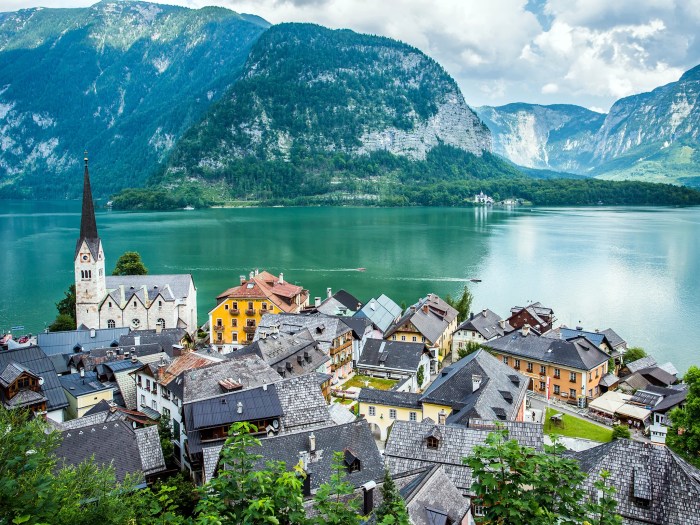
Top Travel Photography Locations in Europe unveils a captivating journey through iconic landmarks, breathtaking natural wonders, and vibrant cityscapes. This exploration delves into the art of capturing stunning images, offering insights into optimal times of day, ideal camera settings, and unique perspectives to elevate your travel photography. From the architectural marvels of renowned cities to the serene beauty of Europe’s natural landscapes, we provide a comprehensive guide to help you create unforgettable photographic memories.
Whether you’re a seasoned photographer or just starting out, this guide offers practical tips and inspiring destinations to ignite your creative vision. We’ll cover everything from mastering composition and lighting techniques to navigating bustling city streets and utilizing public transportation for the perfect shot. Prepare to be inspired and discover your next photographic adventure.
Top Urban Destinations in Europe: Top Travel Photography Locations In Europe
Exploring Europe’s vibrant cities offers a unique blend of history, culture, and modern life. Efficient navigation is key to maximizing your experience, and understanding the intricacies of public transportation systems is paramount. This section focuses on practical travel hacks and the photographic opportunities presented by Europe’s extensive metro networks.
Five Useful Travel Hacks for Navigating Major European Cities Efficiently
Mastering public transport significantly enhances your city exploration. These five hacks streamline your journey and help you avoid common pitfalls.
- Purchase multi-day passes: Investing in a travel pass, often available for 24, 48, or 72 hours, is usually more economical than purchasing individual tickets, especially if you plan on extensive travel within the city. Consider the frequency of your trips and the overall cost to determine if a pass suits your needs. For example, a 72-hour pass in Paris might cover unlimited metro and bus travel, saving you significant time and money compared to purchasing individual tickets for each journey.
- Utilize city transit apps: Apps like Citymapper or Google Maps provide real-time information on public transport schedules, routes, and potential delays. They often offer multiple route options, helping you choose the quickest or most convenient path. This is invaluable when navigating unfamiliar cities, allowing for efficient planning and adjustments based on real-time conditions.
- Learn basic directional terms: Familiarizing yourself with basic directional terms in the local language can be incredibly helpful when asking for directions or understanding announcements. Even a few key phrases can greatly improve your interactions with locals and aid in smoother navigation.
- Travel during off-peak hours: Avoiding rush hour significantly reduces crowding and travel time. While this might require adjusting your sightseeing schedule, it allows for a more comfortable and less stressful commute.
- Validate your tickets: Always validate your tickets before boarding any form of public transport. Failure to do so can result in hefty fines. Look for clearly marked validation machines at stations or on board.
A Photographic Essay: The Unique Aesthetic and Atmosphere of European Metro Systems
European metro systems are not merely functional; they are captivating environments rich in visual storytelling. Each system boasts its own unique architectural style, reflecting the city’s history and character. From the ornate stations of the Paris Métro to the sleek modern designs of Copenhagen’s metro, these spaces offer a diverse range of photographic opportunities.Imagine a photograph: The Parisian Métro, bathed in the soft glow of vintage lighting, with passengers hurrying past ornate tiled walls depicting scenes from Parisian life.
The image captures the bustling energy of the city while showcasing the historical richness of the architecture. Another scene might focus on the stark contrast between the futuristic design of a Copenhagen metro station and the colorful, modern clothing of commuters. This juxtaposition creates a dynamic visual narrative. Finally, a picture could showcase the intricate mosaic work adorning a station in Lisbon, highlighting the artistry and detail often overlooked in daily commutes.
Capturing Compelling Images of Daily Life Within the Metro
The metro is a microcosm of city life, offering candid glimpses into the daily routines and interactions of its inhabitants. Focus on the details: the worn leather of a passenger’s briefcase, the reflection of city lights in someone’s glasses, the fleeting expressions on faces as they read or listen to music. These small details create a sense of intimacy and authenticity.To capture compelling images, experiment with different perspectives and angles.
A low angle shot can emphasize the vastness of the space, while a close-up can reveal the subtle emotions of individual passengers. Utilize natural light where available, and consider using a fast shutter speed to freeze motion and capture sharp details. Remember to be respectful of personal space and avoid intrusive photography.
Top Urban Destinations in Europe: Top Travel Photography Locations In Europe
Europe boasts a captivating blend of historical charm and modern architectural marvels. This section delves into the unique photographic opportunities presented by European cities, focusing on their iconic skyscrapers and the contrasting beauty of urban parks. We will explore how these elements, when captured through a photographer’s lens, create compelling narratives of urban life.
European Cities with Iconic Skyscrapers
Several European cities showcase impressive skyscrapers, each with its own distinct architectural style and historical context. These structures offer a wealth of photographic opportunities, from capturing their imposing height to detailing their intricate facades.
- London, United Kingdom: The Shard, a 95-story glass skyscraper, exemplifies modern architecture. Its angular design and reflective surface create dynamic interplay with light and shadow, offering photographers numerous compositional possibilities. Its height provides breathtaking panoramic views of the city, both from its observation deck and from ground level perspectives.
- Frankfurt, Germany: Frankfurt’s skyline is dominated by numerous skyscrapers, often referred to as the “Mainhattan” skyline. Many are examples of modernist and postmodern architecture, featuring sleek lines and glass facades. The Commerzbank Tower, for instance, is known for its distinctive tiered design and its emphasis on sustainability.
- Moscow, Russia: Moscow’s skyline, a blend of Soviet-era architecture and modern high-rises, provides a unique photographic challenge. The Mercury City Tower, one of the tallest buildings in Europe, presents a striking contrast with older buildings, offering opportunities for juxtapositions of architectural styles across time periods.
- La Défense, Paris, France: While not strictly within the city center of Paris, La Défense is a major business district featuring a cluster of high-rise buildings, including the Grande Arche de la Défense. The architectural styles here are varied, showcasing a mix of modern and postmodern designs, all against the backdrop of the Parisian landscape.
- Warsaw, Poland: Warsaw’s skyline is a testament to its resilience. After significant destruction during World War II, the city has been rebuilt, including the construction of modern skyscrapers like the Warsaw Spire. This presents an interesting narrative for photographers, capturing the blend of historical reconstruction and modern development.
Photographic Opportunities: Skyscrapers from Diverse Angles
The photographic possibilities of skyscrapers are significantly enhanced by exploring different viewpoints. Shooting from ground level emphasizes the sheer scale and imposing presence of the structures. Their reflective surfaces can create captivating reflections of the surrounding city, adding layers of complexity to the image. Conversely, shooting from elevated positions, such as rooftops or other high vantage points, allows for capturing the overall context of the building within the cityscape, revealing its relationship to its surroundings and highlighting the urban fabric.
Aerial perspectives, whether from drones or helicopters, offer unparalleled views, showcasing the building’s architectural details and its place within the larger urban environment.
Urban Parks and Green Spaces in City Photography
Urban parks and green spaces offer a vital counterpoint to the hard lines and geometric shapes of the city’s architecture. These oases of nature provide a refreshing contrast, allowing photographers to create images that emphasize the interplay between the built environment and the natural world. The inclusion of green spaces in cityscapes adds depth, texture, and a sense of tranquility, balancing the dynamism of urban life.
Parks can be used to frame skyscrapers, creating a visual narrative that blends the man-made and the natural. The lush greenery provides a calming visual element that complements the often harsh lines of the city’s buildings.
Urban Photography Tips
Urban photography offers a unique blend of challenges and opportunities. Mastering composition and lighting is key to capturing compelling images that truly reflect the energy and character of the city. This guide provides practical techniques to elevate your urban photography.
Composition in Urban Photography, Top Travel Photography Locations in Europe
Effective composition is fundamental to a strong urban photograph. It guides the viewer’s eye and creates a sense of balance and visual harmony within the often-chaotic urban environment. Several key compositional principles can be applied to achieve this. The rule of thirds, leading lines, and symmetry are particularly useful.
The Rule of Thirds
The rule of thirds suggests placing key elements of your image off-center, along imaginary lines that divide the frame into thirds both horizontally and vertically. Instead of centering your subject, position it at one of the intersections of these lines. This creates a more dynamic and visually appealing composition. Imagine a cityscape with a prominent skyscraper; placing it slightly off-center, rather than directly in the middle, will often produce a more engaging image.
Leading Lines
Leading lines are compositional elements that draw the viewer’s eye through the image. These can be roads, railway tracks, rivers, or even lines of buildings. By strategically positioning your camera, you can use these lines to lead the viewer towards your main subject or to create a sense of depth and perspective. A photograph of a long, straight street receding into the distance, with buildings lining either side, perfectly exemplifies the power of leading lines.
Symmetry
Symmetry creates a sense of balance and order within a photograph. Look for symmetrical elements within the urban environment, such as reflections in water, mirrored buildings, or geometric patterns in architecture. Symmetrical compositions can be strikingly beautiful and visually satisfying. A photograph of a perfectly symmetrical building reflected in a still pond, for instance, could be incredibly impactful.
Lighting in Urban Photography
Lighting plays a crucial role in determining the mood and atmosphere of your urban photographs. Both natural and artificial light sources offer unique opportunities and challenges. Understanding how to harness these light sources is vital.
Natural Light in Urban Photography
Natural light, particularly the golden hour (the hour after sunrise and the hour before sunset), offers warm, soft light that can dramatically enhance your urban images. This time of day casts long shadows and creates a rich, atmospheric quality. Conversely, harsh midday sun can create strong contrasts and deep shadows, which can be used creatively, but often requires careful exposure management.
Artificial Light in Urban Photography
Artificial light sources, such as streetlights, neon signs, and shop windows, add a distinct character to nighttime urban photography. Experiment with long exposures to capture light trails from moving vehicles, creating a sense of movement and energy. Alternatively, shorter exposures can freeze the action and highlight the details of illuminated buildings and streets.
Utilizing Lighting Techniques
Effective use of lighting techniques can significantly impact the mood and atmosphere of your urban photographs.
Step-by-Step Guide to Lighting Techniques
- Identify your light source: Determine whether you’re working with natural or artificial light and assess its quality (hard or soft, warm or cool).
- Adjust your camera settings: Adjust your aperture, shutter speed, and ISO accordingly to achieve the desired exposure and depth of field. For low-light situations, you may need to use a tripod to avoid camera shake.
- Experiment with different angles: Try shooting from different perspectives to see how the light interacts with your subject. Consider shooting from above, below, or at eye level.
- Use light to create mood: Hard light can create dramatic shadows and contrast, while soft light creates a more gentle and serene atmosphere. Consider how the light affects the mood you want to convey.
- Post-processing: Use photo editing software to fine-tune your images, adjusting brightness, contrast, and color balance to enhance the impact of the lighting.
Urban Architecture Tours
Exploring Europe’s cities through the lens of architectural photography offers a unique perspective, revealing the rich history and diverse styles that shape these urban landscapes. By focusing on architectural details and understanding the historical context, photographers can capture images that transcend simple snapshots and become compelling visual narratives.Architectural styles found across European cities offer a diverse range of photographic opportunities.
Understanding these styles allows for a more informed and visually richer photographic experience.
Five Common European Architectural Styles
European cities boast a rich tapestry of architectural styles, each offering unique photographic potential. The following styles represent just a fraction of the architectural diversity found across the continent.
- Gothic: Characterized by pointed arches, ribbed vaults, and intricate stonework. Examples include Notre Dame Cathedral in Paris and the Cologne Cathedral in Germany. The soaring heights and intricate details of Gothic architecture provide ample opportunities for dramatic compositions and close-up shots emphasizing texture and light.
- Baroque: Known for its grandeur, ornamentation, and dramatic use of curves and light. The Palace of Versailles in France and St. Peter’s Basilica in Rome exemplify this style. Photographers can capture the opulence and scale of Baroque architecture through wide-angle shots that encompass the entire building or through detailed shots focusing on intricate carvings and sculptural elements.
- Renaissance: Emphasizing symmetry, balance, and classical proportions. Examples include the Uffizi Gallery in Florence and the Palazzo Pitti in Florence, Italy. The clear lines and balanced compositions of Renaissance architecture lend themselves well to geometric compositions and studies of light and shadow.
- Art Nouveau: Characterized by flowing lines, organic forms, and decorative motifs inspired by nature. Examples include the Casa Batlló and Sagrada Família in Barcelona, Spain. The unique curves and decorative details of Art Nouveau architecture are well-suited to close-up photography, allowing for detailed exploration of textures and patterns.
- Modern/Contemporary: Encompassing a wide range of styles from the early 20th century to the present, characterized by clean lines, functionality, and innovative materials. Examples include the Bauhaus building in Dessau, Germany, and the Guggenheim Museum Bilbao in Spain. Modern architecture often presents opportunities for abstract compositions, playing with lines, shapes, and the interplay of light and shadow.
Photographing Architectural Details
Capturing the essence of architectural styles requires attention to detail. By focusing on textures, patterns, and unique features, photographers can create images that are both aesthetically pleasing and historically informative.Effective architectural photography involves careful consideration of composition, light, and perspective. Utilizing leading lines, symmetry, and the rule of thirds can significantly enhance the visual appeal of architectural photographs.
Furthermore, understanding the interplay of light and shadow is crucial for creating depth and drama in the image. Shooting during the golden hour (sunrise and sunset) often produces the most flattering light, casting long shadows and illuminating architectural details in a visually appealing way.
Sample Architectural Photography Tour Itinerary
A well-planned itinerary maximizes photographic opportunities. Consider the time of day and weather conditions for optimal lighting and atmospheric effects.
Day 1: Paris, France
- Morning (Golden Hour): Notre Dame Cathedral (Gothic) – Capture the intricate stonework and stained glass in the soft morning light.
- Afternoon: Louvre Museum (Renaissance) – Photograph the symmetrical facade and explore the courtyard’s interplay of light and shadow.
- Evening (Blue Hour): Eiffel Tower (Modern) – Capture the iconic structure against the twilight sky.
Day 2: Barcelona, Spain
- Morning (Golden Hour): Sagrada Família (Art Nouveau) – Photograph the intricate facade and unique architectural details in the warm morning light.
- Afternoon: Casa Batlló (Art Nouveau) – Explore the building’s organic forms and decorative elements.
- Evening: Passeig de Gràcia – Capture the overall street scene, showcasing the interplay of different architectural styles along this famous boulevard.
Ultimately, capturing the essence of Europe through the lens involves more than just technical skill; it requires a keen eye for detail, a sense of adventure, and a passion for exploring the diverse beauty of the continent. By combining knowledge of photography techniques with a thoughtful approach to travel, you can create truly remarkable images that capture the spirit and soul of Europe’s many stunning locations.
We hope this guide has inspired you to embark on your own photographic journey across Europe.
Essential FAQs
What is the best time of year to photograph European landscapes?
Spring and autumn generally offer pleasant weather and fewer crowds, providing optimal conditions for landscape photography. Summer can be crowded but offers long daylight hours.
What essential gear should I bring for travel photography in Europe?
A versatile camera (DSLR or mirrorless), a wide-angle lens, a telephoto lens, a tripod, extra batteries, and sufficient memory cards are essential. Consider a polarizing filter for landscapes.
How can I avoid tourist crowds when photographing popular landmarks?
Visit early in the morning or late in the evening, utilize less-popular viewpoints, or consider visiting during the off-season. Explore alternative angles to capture unique perspectives.
What are some tips for shooting stunning night photography in European cities?
Use a tripod, shoot in manual mode, experiment with long exposures, and consider using a remote shutter release to avoid camera shake. Explore different ISO settings to manage light levels.