Classic Route 66 Road Trip Guide: Embark on a journey through Americana’s iconic highway, tracing its historical roots from its inception to its present-day allure. This guide delves into the planning, attractions, cultural experiences, and urban explorations that make a Route 66 road trip unforgettable. Prepare to be captivated by the stories, sights, and sounds of this legendary highway.
From the Mother Road’s humble beginnings to its enduring presence in popular culture, we’ll explore its historical significance, practical travel tips, and the unique charm of its diverse landscapes and vibrant cities. We’ll cover everything from creating a personalized itinerary to uncovering hidden gems along the way, ensuring your Route 66 adventure is both enriching and enjoyable.
Route 66 History & Significance
Route 66, also known as the “Mother Road,” holds a unique place in American history and culture. Its story is one of ambition, innovation, migration, and ultimately, nostalgia. More than just a highway, it became a symbol of the American Dream, connecting the East and West coasts and shaping the landscape and identity of the nation.
The historical development of Route 66 can be broadly divided into several key periods. Its inception in 1926 marked the beginning of the era of automobile travel and the expansion of the American West. The road’s initial alignment was a patchwork of existing roads and trails, and its standardization involved significant engineering and political effort. The Great Depression of the 1930s saw Route 66 become a lifeline for many Americans, providing employment in construction and maintenance and facilitating westward migration in search of opportunity.
World War II further solidified its importance, serving as a crucial transportation route for military personnel and supplies. The post-war boom witnessed the rise of roadside attractions and the flourishing of a unique culture along the route, a culture that continues to resonate today. The eventual decommissioning of Route 66 in 1985, due to the construction of the Interstate Highway System, marked the end of an era, but it also ironically sparked a resurgence of interest in the road’s history and cultural legacy.
Route 66’s Cultural Impact
Route 66’s cultural impact is undeniable. It became a powerful symbol in American popular culture, appearing in countless songs, movies, television shows, and literature. The romanticized image of open roads, adventure, and freedom fueled the American imagination, and Route 66 became inextricably linked to this ideal. The unique roadside architecture – diners, motels, gas stations – became iconic representations of a bygone era, and many of these structures remain popular tourist destinations.
The diverse communities along the route, each with its own distinct character, contributed to the richness and complexity of the Route 66 experience, fostering a sense of community and shared history. The road itself became a character in the American story, reflecting the nation’s changing social, economic, and cultural landscape.
Comparison with Other Iconic American Highways
While other iconic American highways, such as the Lincoln Highway and the Pacific Coast Highway, hold their own historical significance, Route 66 stands apart due to its unique combination of factors. The Lincoln Highway, the nation’s first transcontinental highway, predates Route 66 but lacked the same cultural cachet. The Pacific Coast Highway, with its stunning scenery, appeals to a different kind of traveler.
Route 66, however, uniquely blended elements of adventure, nostalgia, and historical significance, making it a truly iconic American symbol. Its story encompassed westward expansion, the Great Depression, World War II, and the rise of the automobile culture, weaving together various strands of American history in a way that other highways didn’t. Its eventual demise and subsequent rediscovery as a tourist route further solidified its unique place in the American narrative.
Timeline of Major Milestones in Route 66 History
The following timeline highlights key moments in the life of Route 66, illustrating its evolution and enduring legacy.
| Year | Event |
|---|---|
| 1926 | Route 66 officially designated as US Highway 66. |
| 1930s | Route 66 becomes a vital transportation route during the Great Depression, facilitating westward migration. |
| 1940s | The highway plays a crucial role in World War II, transporting troops and supplies. |
| 1950s-1960s | Route 66’s popularity peaks, fueled by the rise of car culture and roadside attractions. |
| 1985 | Route 66 is officially decommissioned due to the Interstate Highway System. |
| 1990s-Present | Route 66 experiences a resurgence in popularity as a tourist destination, celebrating its history and cultural significance. |
Planning Your Route 66 Road Trip
Embarking on a Route 66 road trip requires careful planning to ensure a smooth and memorable journey. This section will guide you through creating a sample itinerary, packing essentials, navigating the Mother Road, and choosing the best mode of transportation for your adventure. Thorough preparation will transform your trip from a simple drive into an unforgettable experience.
Sample 10-Day Route 66 Itinerary
This itinerary focuses on experiencing the iconic landmarks and charming towns along Route 66, balancing driving time with opportunities for exploration. Adjust it to your preferences and available time. Remember to factor in potential delays due to traffic or unexpected attractions.
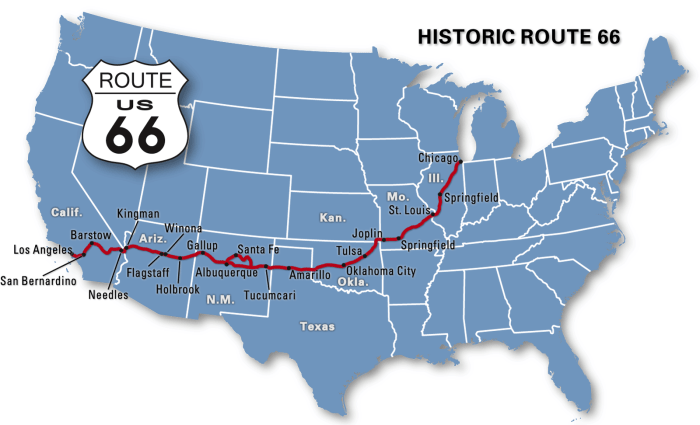
- Day 1-2: Chicago, Illinois to Springfield, Illinois: Begin your journey in Chicago, exploring its vibrant city before heading southwest towards Springfield, the birthplace of Route 66. Visit the Route 66 Hall of Fame and Museum in Springfield.
- Day 3-4: Springfield, Illinois to Oklahoma City, Oklahoma: Continue your journey through Illinois and into Oklahoma, experiencing the changing landscapes. Consider a stop at the iconic Blue Whale of Catoosa, Oklahoma.
- Day 5-6: Oklahoma City, Oklahoma to Amarillo, Texas: Explore Oklahoma City before driving through the vast plains of Texas towards Amarillo. Visit Cadillac Ranch, a quirky roadside attraction featuring colorful vintage Cadillacs half-buried in the ground.
- Day 7-8: Amarillo, Texas to Santa Fe, New Mexico: Enjoy the Texan landscape before entering New Mexico. Santa Fe offers a rich cultural experience, with its historic plaza and art galleries.
- Day 9-10: Santa Fe, New Mexico to Flagstaff, Arizona: Drive through stunning New Mexican scenery before reaching Flagstaff, Arizona, a gateway to the Grand Canyon. Consider extending your stay to explore the Grand Canyon National Park.
Essential Items for a Route 66 Road Trip
Packing strategically is crucial for a comfortable and safe journey. This list includes items beyond the typical road trip essentials, focusing on aspects specific to the Route 66 experience.
- Reliable Vehicle: Ensure your vehicle is in excellent condition before embarking on the journey. Regular maintenance is key.
- Emergency Kit: Include jumper cables, a tire repair kit, first-aid supplies, and a flashlight.
- Navigation System/Maps: While GPS is helpful, having offline maps as a backup is recommended, especially in areas with limited cell service.
- Camera: Capture the stunning landscapes and quirky roadside attractions.
- Comfortable Clothing and Shoes: Prepare for varying weather conditions and plenty of walking.
- Route 66 Guidebook: A detailed guidebook will enhance your understanding and appreciation of the history and landmarks along the route.
Route 66 Navigation and Accommodation
Planning your route and securing accommodations in advance is vital, especially during peak season. Consider using online mapping tools to plan your daily drives, factoring in sightseeing stops and potential traffic. Booking accommodations beforehand, particularly in popular towns, is strongly advised. A mix of motels, hotels, and quirky Route 66-themed lodgings will add to the charm of your trip.
Flexibility is key; be prepared to adjust your itinerary based on unexpected discoveries or unforeseen circumstances.
Transportation Options for a Route 66 Road Trip
Choosing the right mode of transportation significantly impacts your Route 66 experience. Each option offers unique advantages and disadvantages.
| Transportation | Advantages | Disadvantages |
|---|---|---|
| Car | Flexibility, comfort, luggage space | Higher fuel costs, less fuel efficiency compared to a motorcycle |
| Motorcycle | Fuel efficiency, immersive experience | Limited luggage space, weather vulnerability |
Iconic Route 66 Attractions
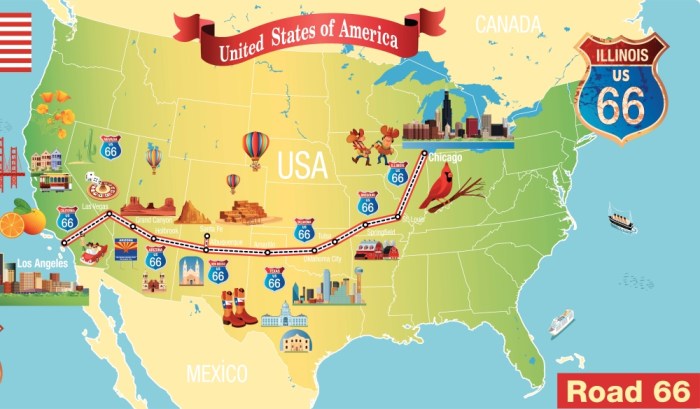
Route 66, the “Mother Road,” is studded with iconic attractions that reflect its rich history and cultural significance. These landmarks offer a glimpse into the past, showcasing the evolution of American roadside culture and the spirit of adventure that defined the era of automobile travel. From quirky roadside attractions to historic buildings, each stop tells a unique story, contributing to the enduring allure of this legendary highway.
The geographical diversity encountered along Route 66 is as captivating as its historical sites. The route traverses varied landscapes, from the deserts of Arizona and New Mexico to the plains of Oklahoma and the rolling hills of Illinois. This journey showcases the stunning beauty of the American landscape, offering a constantly changing backdrop to the adventure.
Five Must-See Route 66 Attractions
Choosing just five is difficult, but these attractions offer a representative sample of the experiences available along Route 66. They represent different eras, architectural styles, and cultural expressions found along the historic highway.
- The Gateway Arch (St. Louis, Missouri): While technically not
-on* Route 66, it served as a symbolic starting point for many travelers heading west. The arch, a magnificent stainless steel monument, commemorates westward expansion and stands as a powerful image of American ambition. Its iconic form is instantly recognizable and provides a memorable beginning or ending to a Route 66 journey. - Meramec Caverns (Sullivan, Missouri): These stunning caverns offer a glimpse into Missouri’s geological history. Their intricate formations and vast chambers provide a stark contrast to the open highway and offer a unique natural attraction along the route. The caverns have a long history, having been inhabited by Native Americans and later used as a hideout during the Civil War.
- Blue Whale of Catoosa (Catoosa, Oklahoma): This whimsical roadside attraction is a testament to the quirky and playful spirit of Route 66. The enormous blue whale, originally built as a swimming pool for a family, became a popular stop for travelers. It is a quintessential example of the unusual and unforgettable sights found along the Mother Road.
- Wigwam Motel (Holbrook, Arizona): This iconic motel, featuring rooms shaped like Native American wigwams, is a classic example of Route 66’s unique roadside architecture. Its kitschy charm and nostalgic appeal make it a highly sought-after lodging option and a memorable photo opportunity. The motel’s design reflects the romanticized image of the American Southwest that was prevalent during Route 66’s heyday.
- Santa Monica Pier (Santa Monica, California): The final destination for many Route 66 travelers, the Santa Monica Pier marks the western terminus of the historic highway. The pier, with its amusement park, vibrant atmosphere, and stunning ocean views, provides a fitting end to a journey across America. It symbolizes the achievement of completing the legendary cross-country drive.
Geographical Diversity of Route 66
Route 66’s journey showcases a remarkable range of American landscapes. The route’s path reveals the geographical variety of the United States. Travelers experience diverse environments, from the flat, fertile farmlands of Illinois to the arid deserts of Arizona and New Mexico, and the dramatic coastline of California.
Map of Key Route 66 Attractions
This simplified map uses a table to illustrate the approximate locations of some key attractions. Note that this is not an exhaustive list, and the precise locations can vary slightly depending on the specific route taken.
| State | Attraction | Approximate Location (Note: This is a simplified representation) |
|---|---|---|
| Missouri | Gateway Arch | East |
| Missouri | Meramec Caverns | Central Missouri |
| Oklahoma | Blue Whale of Catoosa | Northeastern Oklahoma |
| Arizona | Wigwam Motel | Northern Arizona |
| California | Santa Monica Pier | West Coast |
Route 66 Culture & Experiences: Classic Route 66 Road Trip Guide
Route 66 is more than just a road; it’s a vibrant tapestry woven with cultural threads, a living testament to American history and ingenuity. The Mother Road’s legacy extends far beyond its asphalt, influencing art, music, literature, and the very spirit of countless individuals who have traversed its iconic path. Exploring Route 66 offers a unique opportunity to immerse oneself in this rich cultural heritage, experiencing firsthand the traditions and stories that have shaped the region.
Local Festivals and Events
Many towns along Route 66 celebrate their unique history and heritage through vibrant annual festivals and events. These celebrations often showcase local crafts, music, and cuisine, offering visitors a genuine taste of Route 66 culture. For example, the annual Route 66 Mother Road Festival in Springfield, Illinois, features car shows, live music, and historical reenactments, drawing thousands of visitors each year.
Similarly, towns like Seligman, Arizona, host regular events that highlight their Route 66 legacy, attracting enthusiasts from around the world. These events are a fantastic way to experience the warmth and hospitality of the Route 66 communities and connect with the living legacy of the road.
Route 66’s Influence on Art, Music, and Literature
The allure of Route 66 has captivated artists, musicians, and writers for decades, inspiring countless works that capture its spirit and essence. The iconic imagery of roadside diners, classic cars, and sprawling landscapes has become synonymous with American culture, appearing in paintings, photographs, songs, and novels. For example, the melancholic beauty of the desert landscape has been a recurring theme in numerous paintings and photographs, while the open road has served as a metaphor for freedom and adventure in countless songs and literary works.
The iconic imagery of Route 66, such as the painted desert and the neon lights of roadside motels, have inspired countless creative endeavors. John Steinbeck’s “The Grapes of Wrath” provides a poignant literary depiction of the road’s impact on migrant workers during the Great Depression. Similarly, countless songs have been written about the open road, capturing the spirit of freedom and adventure that Route 66 embodies.
Personal Anecdotes from Route 66 Travelers
One traveler recounted a particularly memorable experience in a small town along Route 66, where a local resident shared stories of their family’s history intertwined with the road’s development. Another shared their awe at the vastness of the landscapes, punctuated by the charming roadside attractions that dotted the route. These personal accounts highlight the emotional connection that Route 66 fosters, transcending the mere act of travel to become a deeply personal and enriching experience.
The sense of community and shared history along the route is palpable, creating lasting memories for those who journey its length. Many travelers speak of the unexpected encounters and the unexpected kindness they encountered along the way, further enriching their journey.
Recommended Books, Movies, and Documentaries, Classic Route 66 Road Trip Guide
A deeper understanding of Route 66’s cultural significance can be gained through various media. “Route 66: The Mother Road” by Michael Wallis provides a comprehensive history of the road, while “Get Your Kicks on Route 66” is a popular travelogue that captures the spirit of a Route 66 road trip. The documentary “Cars on Route 66” explores the automotive history associated with the highway, showcasing the classic cars that have traversed its length.
These resources offer different perspectives on the road’s rich history and cultural impact, enriching the experience for those planning their own journey. Further exploration into books, movies, and documentaries related to Route 66 offers a wealth of information and inspiration.
Top Urban Destinations along Route 66
Route 66 boasts a diverse range of urban experiences, offering travelers a blend of history, culture, and modern amenities. From bustling metropolises to charming smaller cities, each stop along the Mother Road provides a unique perspective on American life and its evolution. This section highlights some of the most compelling urban destinations, focusing on their distinctive attractions and the experiences they offer.
Top Five Urban Destinations along Route 66 and Their Unique Attractions
Five cities stand out as offering particularly compelling urban experiences along Route 66: Chicago, Illinois; Springfield, Missouri; Tulsa, Oklahoma; Oklahoma City, Oklahoma; and Santa Monica, California. Chicago, the eastern terminus, offers world-class museums, stunning architecture, and a vibrant culinary scene. Springfield, Missouri, boasts a rich Route 66 history, evident in its preserved architecture and museums. Tulsa, Oklahoma, is a thriving metropolis with a distinctive arts district and a growing culinary scene.
Oklahoma City, also in Oklahoma, offers a blend of historical landmarks and modern attractions. Finally, Santa Monica, California, the western terminus, provides stunning beaches, a vibrant pier, and a laid-back Californian atmosphere. Each city provides a unique window into the diverse landscapes and cultures that Route 66 traverses.
Best Cities for Nightlife along Route 66
Several cities along Route 66 are renowned for their vibrant nightlife. Tulsa, Oklahoma, with its diverse bars and live music venues, offers a lively atmosphere. Santa Monica, California, provides a range of options, from beachside bars to upscale lounges. Chicago, Illinois, naturally offers an unparalleled selection of nightlife experiences, given its size and cosmopolitan nature. These cities offer a diverse range of entertainment options, from live music and dancing to casual bars and sophisticated cocktail lounges, catering to a wide variety of tastes.
Shopping Travel Guides for Three Major Cities along Route 66
Three cities offer particularly compelling shopping experiences:
- Chicago, Illinois: From high-end department stores on Michigan Avenue to independent boutiques in diverse neighborhoods, Chicago caters to every shopping preference. The Magnificent Mile offers luxury brands, while areas like Wicker Park and Lincoln Park feature unique, locally-owned shops.
- Tulsa, Oklahoma: Tulsa’s downtown area features a mix of independent boutiques and larger retail chains. The city also boasts several shopping malls offering a broader selection of goods.
- Santa Monica, California: Third Street Promenade provides a vibrant outdoor shopping experience with a mix of high-street brands and unique boutiques. The area also offers numerous restaurants and entertainment options, making it a complete destination.
Urban Architecture Tours in Two Cities on Route 66
Two cities offer particularly rewarding architectural tours:
- Chicago, Illinois: A Chicago architectural tour is a must-do. The city boasts a stunning collection of skyscrapers and buildings representing various architectural styles, from the iconic Art Deco of the Tribune Tower to the modern designs of Willis Tower. Guided boat tours offer unique perspectives on the city’s skyline.
- Springfield, Missouri: Springfield’s Route 66 architecture is a key attraction. Walking tours showcase the city’s preserved Art Deco and Streamline Moderne buildings, reflecting the era of Route 66’s heyday.
Street Food and Markets Found in Different Cities along Route 66
Chicago offers a world-renowned culinary scene, with diverse street food options and bustling farmers’ markets. Tulsa boasts a growing number of food trucks and markets featuring local and regional specialties. Santa Monica offers a variety of casual dining options, including beachfront eateries and farmers’ markets showcasing California produce. Each city reflects the unique culinary traditions of its region.
City Travel Hacks Specific to Route 66 Cities
Utilizing public transport where available (Chicago and some areas of other larger cities) can save on parking and traffic hassles. Taking advantage of walking tours, especially in historic districts, allows for a deeper immersion in the city’s character. Checking local event calendars can uncover hidden gems and festivals.
Metro Adventures in Cities with Public Transport along Route 66
Chicago’s “L” train system provides efficient access to various neighborhoods and attractions. Other cities may have bus systems that can be used to navigate key areas. Checking local transit websites before your trip is recommended.
Skyscraper Destinations along Route 66
Chicago is the clear winner here, with its iconic skyscrapers like the Willis Tower and the John Hancock Center offering breathtaking views of the city and Lake Michigan.
Urban Photography Tips for Capturing the Essence of Route 66 Cities
Use the golden hour (sunrise and sunset) for optimal lighting. Capture the details – architectural features, street signs, vintage cars. Experiment with different perspectives and angles. Focus on capturing the human element – people interacting with the city.
Notable Urban Parks and Green Spaces in Route 66 Cities
Chicago’s Millennium Park, with its iconic Cloud Gate (“The Bean”), offers a vibrant urban green space. Many smaller cities along the route have charming local parks offering respite and scenic views.
Comparison of Top 3 Urban Destinations along Route 66
| City | Architectural Highlights | Shopping | Nightlife |
|---|---|---|---|
| Chicago | Skyscrapers, Art Deco, Modern | Magnificent Mile, independent boutiques | Diverse and extensive |
| Tulsa | Art Deco, Route 66 architecture | Mix of boutiques and malls | Live music venues, bars |
| Santa Monica | Modern architecture, beachside buildings | Third Street Promenade, boutiques | Beach bars, upscale lounges |
Route 66 Photography & Visuals
Route 66 offers a photographer’s paradise, brimming with iconic imagery and unique visual elements that capture the spirit of Americana. From the vast, open landscapes to the quirky roadside attractions, every mile presents a compelling photographic opportunity. This section explores the iconic visuals of Route 66 and suggests prime locations for capturing its essence.The visual appeal of Route 66 stems from a fascinating blend of natural beauty and human-made marvels.
The vast, sun-drenched landscapes of the American Southwest, with their dramatic mesas, rolling hills, and expansive skies, provide a breathtaking backdrop. This natural beauty is punctuated by the quirky and often whimsical roadside attractions, from towering neon signs to vintage gas stations and quirky statues, each telling a story of the road’s rich history. The contrast between the raw power of nature and the playful creativity of human ingenuity is what makes Route 66 so visually captivating.
The interplay of light and shadow, particularly during the golden hour, further enhances the dramatic effect of these scenes.
Iconic Route 66 Imagery
The iconic imagery of Route 66 is diverse and instantly recognizable. Classic images include vintage gas stations with their distinctive architecture and vibrant colors, chrome-laden diners beckoning travelers with the promise of comfort food, and sprawling motels showcasing mid-century modern design. These structures, often adorned with neon signs, represent the heyday of car travel and roadside commerce. Beyond the man-made attractions, the vastness of the American desert landscape, punctuated by iconic landmarks like the Painted Desert and Petrified Forest, forms an integral part of the Route 66 visual narrative.
The seemingly endless horizon, punctuated by classic roadside structures, creates a timeless and instantly recognizable aesthetic.
Visual Elements Contributing to Route 66’s Unique Appeal
Several key visual elements contribute to Route 66’s unique character. The vibrant colors of the neon signs, especially at night, create a dazzling spectacle, contrasting sharply with the muted tones of the desert landscape. The weathered textures of the old buildings and roadside attractions tell stories of time and travel, adding a layer of historical depth to the images.
The geometric shapes and lines of the architecture, often reflecting mid-century modern design, provide a pleasing visual rhythm. The juxtaposition of the old and the new, the natural and the man-made, is a recurring theme that adds complexity and visual interest. The sense of scale, with vast landscapes stretching to the horizon, contrasted by intimate details of roadside attractions, creates a dynamic and engaging visual experience.
Prime Photography Locations along Route 66
Many locations along Route 66 offer exceptional photographic opportunities.The Blue Whale of Catoosa, Oklahoma: This whimsical roadside attraction, a giant blue whale offering a slide and other activities, provides a striking contrast between the surreal and the mundane. The vibrant blue of the whale against the surrounding landscape creates a memorable image.The Wigwam Motel in Holbrook, Arizona: These iconic teepee-shaped motel rooms, a classic Route 66 roadside attraction, offer a unique and instantly recognizable photographic subject.
The interplay of light and shadow on the curved surfaces creates a visually compelling image.The Santa Fe Drive-In Theatre in Santa Fe, New Mexico: This historic drive-in theatre, offering a glimpse into a bygone era of entertainment, provides a compelling setting for capturing the nostalgia of Route 66. The vintage architecture and the vast screen against the night sky create a dramatic composition.Meramec Caverns in Stanton, Missouri: These stunning caverns offer a unique opportunity to capture the beauty of subterranean formations, providing a dramatic contrast to the open landscapes typically associated with Route 66.
The interplay of light and shadow within the caverns creates a mystical and awe-inspiring atmosphere.The Cadillac Ranch in Amarillo, Texas: This iconic roadside attraction, featuring ten colorful Cadillacs buried nose-first in the ground, is a visually striking and instantly recognizable landmark. The bright colors of the cars against the vast expanse of the Texas plains create a striking and memorable image.
Your Classic Route 66 Road Trip Guide concludes, but your adventure is just beginning! This guide has provided a framework for planning an unforgettable journey along this iconic highway, blending historical context with practical advice and inspiring you to create your own unique Route 66 experience. Remember to embrace the unexpected, savor the moments, and create memories that will last a lifetime.
Hit the road and enjoy the journey!
Top FAQs
What is the best time of year to travel Route 66?
Spring and fall offer pleasant temperatures and fewer crowds than summer.
How long does it take to drive the entire Route 66?
Allow at least two weeks to comfortably explore the major attractions; more time is recommended for a thorough experience.
Is Route 66 fully paved?
Most of Route 66 is paved, but some sections may be gravel or unpaved, so check road conditions before you go.
What type of vehicle is best for a Route 66 road trip?
A reliable car is ideal, but motorcycles or even classic cars are popular choices. Consider your comfort and the terrain.