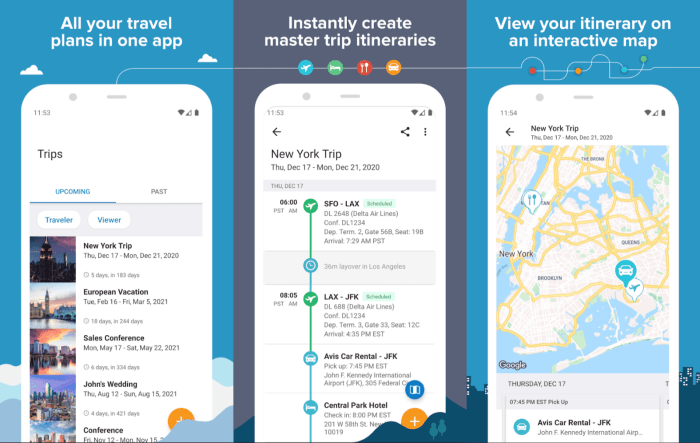
Top Apps for Road Trip Planning are revolutionizing how we explore the open road. No longer is meticulous planning a daunting task; these apps streamline everything from route optimization and accommodation booking to real-time traffic updates and discovering hidden gems along the way. This guide delves into the best options available, comparing their features and highlighting what makes them stand out.
We’ll equip you with the knowledge to choose the perfect app for your next adventure.
From meticulously crafted itineraries to effortlessly navigating unfamiliar territories, these apps transform the potential pitfalls of road travel into seamless journeys. We’ll examine key features, providing a comprehensive overview of the apps that will elevate your road trip experience, making it more enjoyable and stress-free.
City Travel Hacks: Top Apps For Road Trip Planning
Navigating unfamiliar cities can be daunting, but with a few smart strategies, you can transform your urban exploration into a smooth and budget-friendly adventure. These hacks focus on efficient and affordable ways to move around, find your way, and make the most of your time in a new city.
Utilizing Public Transportation
Effective use of public transportation is crucial for efficient and affordable city travel. Many cities boast extensive and well-connected public transit systems, offering a significantly cheaper alternative to taxis or ride-sharing services. Understanding the system’s routes, schedules, and payment methods is key. For instance, purchasing a day or multi-day pass can often provide substantial savings compared to individual fares.
Consider downloading a transit app specific to the city you are visiting; these apps typically provide real-time information on bus and train schedules, helping you plan your journeys accurately and avoid delays. In London, using the Oyster card or contactless payment is much more economical than buying individual tickets for the Underground. In New York City, the MetroCard offers similar cost advantages for subway and bus travel.
Leveraging City Maps and Navigation Apps
Modern navigation apps offer much more than just directions. They provide real-time traffic updates, allowing you to avoid congested areas and save valuable time. Many apps also integrate public transportation schedules, enabling you to plan multimodal journeys efficiently. Furthermore, some apps highlight points of interest along your route, allowing for spontaneous sightseeing opportunities. For example, Google Maps not only provides turn-by-turn directions but also shows nearby restaurants, cafes, and attractions.
Similarly, Citymapper provides comprehensive transit information for many major cities worldwide, helping you navigate even the most complex public transport networks.
Walking and Cycling for Short Distances
Walking or cycling offers a cost-effective and enjoyable way to explore a city, particularly for shorter distances. It allows you to experience the city’s atmosphere firsthand, discovering hidden gems and local favorites that you might miss while using public transport. Walking also provides a great opportunity for exercise and allows for greater flexibility in exploring side streets and less-traveled paths.
Many cities have dedicated bike-sharing programs, providing an affordable and convenient way to get around. For example, Paris’s Vélib’ and New York City’s Citi Bike programs offer extensive networks of readily available bicycles.
Taking Advantage of Free Activities
Many cities offer a wealth of free activities and attractions, from parks and museums with free admission days to walking tours and free concerts. Researching free or low-cost options before your trip can significantly reduce your overall expenses. Websites and apps often list free events and activities, allowing you to plan your itinerary accordingly. For example, many major museums offer free admission on specific days or evenings.
Similarly, many cities host free outdoor concerts and festivals throughout the year.
Utilizing Tourist Information Centers
Tourist information centers are invaluable resources for navigating a new city. They typically provide free maps, brochures, and information on local attractions, events, and transportation. Staff members can answer your questions and offer personalized recommendations, helping you make the most of your trip. Moreover, they often have information on discounts and special offers, saving you money on various activities and services.
Visiting a tourist information center upon arrival can greatly enhance your overall travel experience and help you avoid common tourist traps.
Metro Adventures
Navigating a city’s subway system can be an adventure in itself, offering a unique perspective on urban life and a glimpse into the city’s history and culture. Each metro system boasts its own distinct personality, shaped by its design, historical context, and the city it serves. This exploration will delve into the characteristics of three iconic metro systems, highlighting their unique features and offering practical tips for efficient and safe travel.
The London Underground: A Historical Journey Beneath the City
The London Underground, affectionately known as the “Tube,” is a sprawling network with a rich history dating back to 1863. Its iconic roundel logo is instantly recognizable worldwide. The system’s evolution is reflected in its architecture, with a mix of deep-level tube lines, built using cutting-edge engineering techniques of the early 20th century, and shallower lines showcasing a variety of architectural styles.
The Tube’s deep-level stations, often characterized by their deep platforms and long escalators, offer a fascinating glimpse into London’s subterranean infrastructure. Many stations feature original tilework and signage, preserving a sense of the past. The experience of using the Tube involves navigating a complex network of lines and stations, but the efficiency of the system and the frequency of trains generally ensure a smooth journey.
Navigating the Tube efficiently requires understanding the different lines and zones, utilizing the Oyster card or contactless payment for ease of travel, and being mindful of peak hours to avoid overcrowding. Safety is prioritized through clear signage, announcements, and the presence of Transport for London staff.
The Paris Métro: Art and Elegance Underground
The Paris Métro is renowned for its elegant Art Nouveau stations, many of which are adorned with stunning mosaics, intricate tilework, and architectural details. Built in the early 20th century, its design reflects the artistic sensibilities of the Belle Époque. The system is characterized by its relatively shallow tunnels and smaller stations compared to the London Underground, giving it a more intimate feel.
The experience of using the Paris Métro often involves navigating a bustling crowd, but the frequency of trains and the clear signage make it relatively easy to use. Efficient use of the Métro involves purchasing a Navigo Découverte pass for unlimited travel within designated zones, understanding the different lines and their connections, and being aware of pickpockets, particularly during peak hours.
Safety is enhanced by the presence of security personnel in many stations.
The New York City Subway: A City’s Pulse Beneath the Streets
The New York City Subway is one of the world’s largest and most extensive rapid transit systems, a testament to the city’s sprawling urban landscape. Its history reflects the city’s constant evolution and growth, with various lines and extensions added over the years. The system’s design is characterized by its vast network, encompassing a diverse range of stations, from grand elevated stations to smaller underground platforms.
The experience of using the New York City Subway can be overwhelming, but the sheer scale and constant movement offer a unique perspective on the city’s energy. Efficient use involves purchasing a MetroCard, understanding the different lines and their routes, and being aware of your surroundings to avoid potential safety concerns. The MTA provides extensive information on its website and mobile app, aiding in navigation and providing real-time updates on service disruptions.
While generally safe, riders should be vigilant about their belongings and surroundings, particularly in less-populated areas or late at night.
Skyscraper Destinations
Soaring high above the bustling streets, skyscrapers represent architectural marvels and symbols of human ambition. These vertical cities offer not only stunning views but also a glimpse into the history and evolution of urban design. Exploring these iconic structures provides a unique perspective on the city itself and its place in the world.
Iconic Skyscrapers and Their Architectural Styles
The following list details five iconic skyscrapers, highlighting their architectural styles and historical significance. These structures represent different eras and architectural movements, showcasing the evolution of skyscraper design.
- Empire State Building, New York City: Built in the Art Deco style, completed in 1931, the Empire State Building was the tallest building in the world for many years. Its stepped design and ornamented facade are hallmarks of the era. Its construction during the Great Depression symbolized hope and ambition. The building’s enduring popularity speaks to its architectural significance and cultural impact.
- Chrysler Building, New York City: Also completed in 1930, the Chrysler Building is another Art Deco masterpiece. Its distinctive spire, crafted from stainless steel, and its ornamented exterior, featuring eagles and sunbursts, showcase the exuberance of the era. Its design was a response to the competitive race to build the world’s tallest building.
- Eiffel Tower, Paris: While technically not a skyscraper in the traditional sense, the Eiffel Tower’s impact on the cityscape is undeniable. Built for the 1889 World’s Fair, its wrought-iron lattice structure was revolutionary for its time. It became a symbol of Paris and France, a testament to engineering prowess and a stunning example of 19th-century industrial design.
- Burj Khalifa, Dubai: Completed in 2010, the Burj Khalifa is currently the tallest building in the world. Its postmodern design incorporates Islamic architectural elements, such as arabesque patterns, and features a unique, tapering profile. Its construction showcases the ambition of modern Dubai and its rapid development.
- Shanghai Tower, Shanghai: Completed in 2015, the Shanghai Tower is the second-tallest building in the world. Its twisting design, inspired by Chinese traditions and modern aesthetics, creates a visually striking silhouette. The building’s sustainable features, such as its double-skin facade and wind-harnessing technology, are also noteworthy.
Impact on Cityscapes
These skyscrapers have profoundly impacted their respective cityscapes. They have become instantly recognizable landmarks, shaping the skyline and influencing urban planning. Their presence has also spurred economic growth and development in their surrounding areas, attracting businesses and tourists. The visual impact is significant, transforming the skyline and creating new perspectives on the city. For example, the Empire State Building’s imposing presence redefined the New York City skyline, while the Burj Khalifa has become a symbol of Dubai’s global ambition.
Appeal as Tourist Attractions
The appeal of visiting these skyscrapers as tourist attractions is multifaceted. The breathtaking panoramic views from observation decks are a major draw, offering unparalleled perspectives of the city and surrounding areas. Many skyscrapers also house museums, restaurants, and other attractions, enhancing the visitor experience. Furthermore, these buildings represent significant achievements in architecture and engineering, making them fascinating destinations for those interested in design and history.
The opportunity to stand within these iconic structures and experience their grandeur firsthand is a compelling draw for many tourists.
Urban Photography Tips
Urban photography offers a unique opportunity to capture the dynamism and beauty of city life. From bustling streets to quiet alleyways, the urban landscape is brimming with photographic potential. Mastering a few key techniques can significantly elevate your urban photography, transforming snapshots into compelling visual narratives.
Effective urban photography relies heavily on understanding composition, lighting, and choosing impactful subject matter. By carefully considering these elements, photographers can create images that are not only technically proficient but also emotionally resonant and visually stunning. The interplay of these elements allows for the creation of photographs that tell stories, evoke emotions, and capture the essence of the urban environment.
Compositional Techniques for Urban Scenes
Strong composition is crucial for creating impactful urban photographs. The arrangement of elements within the frame directly impacts the viewer’s experience and understanding of the image. Consider using leading lines, rule of thirds, and negative space to guide the viewer’s eye and create a sense of depth and balance.
For example, a photograph featuring converging streets can utilize leading lines to draw the viewer’s attention towards a specific point of interest, such as a landmark or a significant event. The rule of thirds, placing key elements off-center, can create a more dynamic and visually appealing composition, while strategic use of negative space can emphasize a particular subject and create a feeling of openness or isolation.
Harnessing Light in Urban Photography
Lighting plays a pivotal role in shaping the mood and atmosphere of an urban photograph. The golden hour (sunrise and sunset) offers warm, soft light that can dramatically enhance the textures and colors of buildings and streets. Conversely, harsh midday sun can create strong shadows and high contrast, which can be used creatively to emphasize form and texture, or mitigated with appropriate exposure adjustments.
Consider how different lighting conditions affect your subject. The soft light of a cloudy day can be ideal for capturing details and textures, while the dramatic light of a rainy evening can add a sense of mystery and atmosphere. Experiment with backlighting to create silhouettes or use fill flash to balance harsh shadows.
Subject Matter Selection in Urban Environments
The choice of subject matter significantly influences the story your photograph tells. Urban environments offer a vast array of subjects, from architectural marvels to everyday life scenes. Look for interesting details, patterns, and textures that reflect the unique character of the city. Consider capturing candid moments of daily life, such as people interacting in public spaces or vehicles moving through traffic.
For instance, a close-up shot of a weathered brick wall might reveal intricate details often overlooked, while a wide shot capturing a bustling marketplace can convey the vibrant energy of the city. Remember that the most compelling urban photographs often reveal the human element within the urban landscape, capturing moments of interaction and daily life.
Enhancing Storytelling Through Photographic Techniques
Different photographic techniques can significantly enhance the storytelling aspect of urban photography. Depth of field, for instance, can be used to isolate a subject from its surroundings or to create a sense of depth and scale. A shallow depth of field, achieved with a wide aperture, can blur the background, drawing attention to the main subject. Conversely, a deep depth of field, achieved with a narrow aperture, can keep both foreground and background in sharp focus, showcasing the intricate details of a scene.
Similarly, perspective can be used to create dramatic effects. Shooting from a low angle can make buildings appear taller and more imposing, while shooting from a high angle can offer a unique bird’s-eye view of the urban landscape. Experimenting with different perspectives and angles can add visual interest and enhance the narrative impact of your photographs.
Post-Processing Techniques for Urban Images
Post-processing can further refine your urban photographs, enhancing their visual appeal and storytelling potential. Careful adjustments to contrast, saturation, and sharpness can bring out the best in your images. However, it’s important to maintain a natural look and avoid over-processing, which can detract from the authenticity of the photograph. Subtle adjustments can significantly improve the overall impact of your image, while maintaining the integrity of the original scene.
For example, selectively increasing contrast can emphasize the textures of a building’s facade, while subtly increasing saturation can enhance the vibrancy of a street scene. Remember that post-processing should complement, not overshadow, the original photograph.
Urban Parks and Green Spaces
Urban parks and green spaces serve as vital lungs within the concrete jungles of our cities, offering respite from the hustle and bustle and providing essential ecological benefits. They contribute significantly to the overall health and well-being of city dwellers, acting as havens for recreation, biodiversity, and environmental balance. Their preservation is crucial for maintaining a sustainable and livable urban environment.
Three examples of urban parks showcasing unique features and ecological roles are Central Park in New York City, High Line in New York City, and Millennium Park in Chicago. Each offers a distinct experience and contributes uniquely to its respective city’s ecosystem.
Central Park’s Ecosystem and Recreational Opportunities
Central Park, a sprawling 843-acre green space in the heart of Manhattan, is a masterpiece of landscape architecture. Its diverse ecosystem includes forests, meadows, lakes, and wetlands, supporting a surprising array of plant and animal life within a densely populated urban area. The park’s carefully designed landscape provides habitat for various bird species, mammals, and insects, contributing to urban biodiversity.
Recreational opportunities abound, including walking and biking paths, boating on the lake, numerous playgrounds, and the famous Bethesda Terrace and Fountain. The park also hosts numerous cultural events throughout the year, from concerts to Shakespeare in the Park.
The High Line’s Transformation and Unique Features
The High Line, a repurposed elevated railway line transformed into a linear park, demonstrates innovative urban green space development. Its unique elevated design offers stunning city views while providing a unique habitat for plants adapted to drier, sunnier conditions. The park features a diverse range of plantings, emphasizing native species and drought-tolerant varieties. The High Line offers a quieter, more contemplative experience than Central Park, providing walking paths, public art installations, and opportunities for passive recreation.
Its success has inspired similar projects worldwide, showcasing the potential of repurposing urban infrastructure for green spaces.
Millennium Park’s Public Art and Diverse Spaces, Top Apps for Road Trip Planning
Millennium Park in Chicago showcases a modern approach to urban park design, integrating public art, architecture, and green spaces seamlessly. The park’s iconic Cloud Gate (“The Bean”) sculpture is a popular attraction, but it also features extensive gardens, walking paths, the Crown Fountain (interactive water feature), and the Lurie Garden, a meticulously designed garden showcasing diverse plant life. Millennium Park provides a vibrant and engaging public space, fostering social interaction and community engagement.
The park’s design emphasizes accessibility and inclusivity, making it a welcoming space for people of all ages and abilities.
The Importance of Preserving Urban Green Spaces
Preserving urban green spaces is essential for the physical and mental well-being of city residents. Studies have shown that access to green spaces reduces stress levels, improves cardiovascular health, and enhances cognitive function. Furthermore, these spaces contribute to improved air quality, reduced urban heat island effect, and stormwater management. The ecological benefits extend beyond human health, supporting biodiversity and contributing to a more sustainable urban environment.
Investing in and protecting these valuable resources is vital for creating healthy, vibrant, and resilient cities.
Ultimately, selecting the right road trip planning app depends on your individual needs and preferences. While the apps discussed offer a range of excellent features, remember that effective road trip planning also involves careful budgeting, packing strategically, and prioritizing safety. By combining the power of these technological tools with sound preparation, you can embark on unforgettable adventures, making lasting memories along the way.
Happy travels!
User Queries
What if I lose internet connectivity?
Many apps offer offline map functionality, allowing for navigation even without an internet connection. Check the app’s features before your trip to ensure this capability.
How do these apps handle unexpected delays?
Most apps provide real-time traffic updates, allowing you to adjust your route dynamically to avoid delays. Some may even offer alternative routes automatically.
Can I share my itinerary with others?
Many apps allow you to share your itinerary with friends or family, enabling them to track your progress and stay informed about your location.
Are these apps free to use?
Some apps offer basic features for free, while others may require a subscription for access to premium features such as offline maps or advanced route planning.